

By Hank Eder
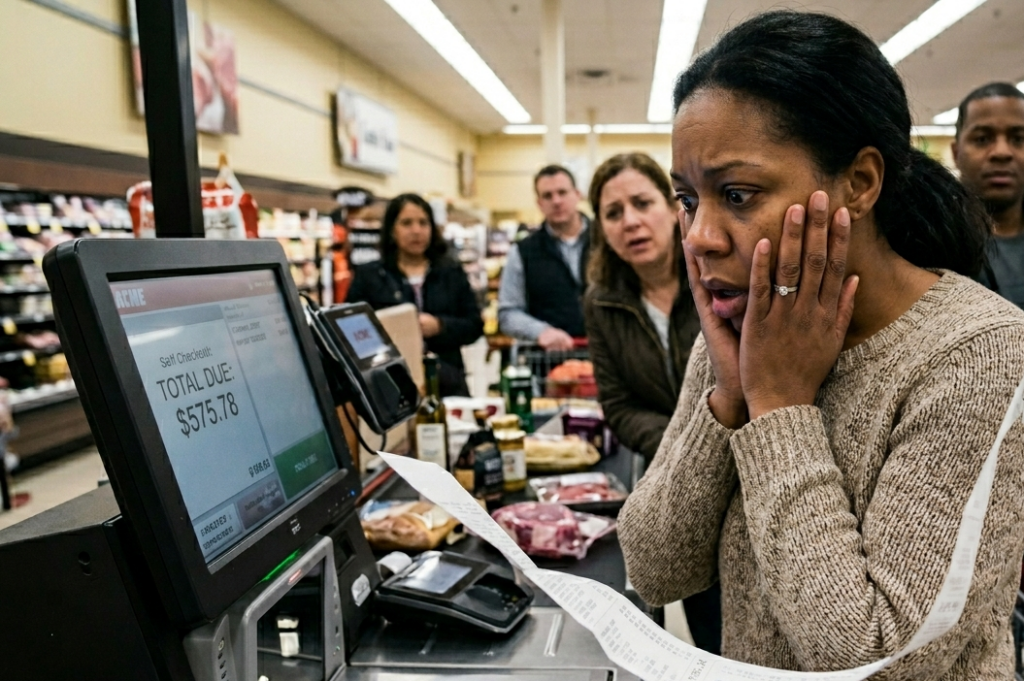
The phrase “cost of living” has moved from the business section of the newspaper to the permanent, nagging background noise of our daily lives. It’s the uninvited guest at every dinner party, whispering about the price of the butter on the table. For most of us, looking at a grocery receipt these days feels a bit like reading a suspense novel where the ending must inevitably be, “and then he went broke.”
But if we want to move past the frustration, we have to look at the “why.” Several economic tectonic plates have shifted at once. We’ve dealt with the long tail of global supply chain disruptions that turned “just-in-time” delivery into “maybe-next-month.” The current war on Iran makes that far worse. Add to that the volatility of energy markets and a housing shortage decades in the making. When demand for a roof over your head stays high but the supply of new builds remains sluggish, prices don’t just rise. They take the express shuttle to Mars.
A Tale of Two Economies
As a Boomer, I look at the landscape today and realize I’m viewing it through a lens that simply doesn’t fit the current reality. Let’s take a trip back to 1976. I was 22 years old, navigating the world with a sense of optimism that felt statistically justified.
At that time, I shared a fully-furnished apartment with a friend. Our total rent? $180 a month. My share was a cool $90. To put that in perspective, I was bringing in about $750 a month. Even with a modest income, I wasn’t just “surviving”; I was living well. I could fill my tank for less than 50 cents a gallon and still have plenty left over for a night out.
Compare that to the grocery aisle. In 1976, a gallon of milk averaged about $1.65; today, you’re lucky to find it under $4.00. A loaf of bread was roughly 30 cents; now it’s frequently over $2.50 for the good stuff. Ground beef was under a dollar a pound; today, that same pound will set you back five or six bucks. While those numbers might seem like a natural progression of inflation, the math falls apart when you look at how wages have (or haven’t) kept pace.
Now let’s compare my college expenses to today’s young people. In 1975, the estimated full cost of attendance (COA) at the University of Florida—which includes tuition, fees, room and board—was approximately $1,600 to $1,700 for the academic year for in-state students.
Today, the current in-state cost of attendance would be roughly $24,000. That’s nearly 24 times higher, but minimum wage is barely four times higher!
The bottom line is that I could work over the summer and save up for about two-thirds of a year’s tuition, and then work part-time during the upcoming semesters. By comparison, today’s students don’t have enough hours available to cover that $24,000. So, they graduate with crushing debt right off the bat.
The “Bootstrap” Myth
There is a popular narrative that suggests younger generations—the Millennials and Gen Z—just aren’t “pulling themselves up by their bootstraps” the way we did. We talk about hard work as if it’s a magic wand that can disappear a 400% increase in housing costs.
The reality is that conditions are fundamentally different. Today, many young people are juggling two or even three jobs. They aren’t sharing an apartment with one friend; they’re splitting a three-bedroom house with five people just to keep the lights on. For me, home ownership felt like a natural, attainable milestone. For a 22-year-old today, looking at the median home price in many markets feels like looking at the price of a private island. It’s not a lack of ambition; it’s a matter of basic math.
Many young adults are genuinely concerned (and rightfully so) that they will never reach the standard of living their parents enjoyed. When the entry-level price for “adulthood” has tripled or even quadrupled, but the entry-level salary has barely nudged forward, the “bootstrap” advice starts to sound a lot like telling someone to jump over a skyscraper.
Bridging the Great Divide
Instead of the “back in my day” lectures or the “okay, Boomer” dismissals, we need to open a real dialogue. Stereotyping is easy; understanding is a lot more work, but the rewards are much higher.
How do we close the gap? It starts with learning from each other.
We’re all in the same boat, even if the waves seem a lot steeper for those just starting to row. If we stop pointing fingers and start sharing the oars, we might find that discovering solutions becomes a lot easier to manage when we aren’t paying the price of being divided.
Ultimately, we have to stop treating the economy like a competition where one generation’s success is another’s failure. The path forward isn’t found in more finger-pointing or smug “bootstrap” lectures. It’s found in a genuine exchange of wisdom and empathy. Boomers can offer the perspective of having survived previous cycles of volatility, while younger generations can teach us how to navigate a digital, fast-paced world that moves at a speed we never had to contemplate. If we can trade our judgment for a little curiosity, we might find that while the prices have changed, our shared desire for a stable, dignified life hasn’t.
So, let’s start talking to each other instead of at or about each other. At the end of the day, we’re all trying to make it home without the grocery receipt giving us a heart attack.
About the author:
Hank Eder is a marketing, branding, and web design professional living in the beautiful mountains of Western North Carolina. He designed and maintains the Story Medicine Worldwide website.
Hank can be reached via email at [email protected]
Visit on the web at https://hankeder.com